Results of habitat factors on larvae inhabitation persistance
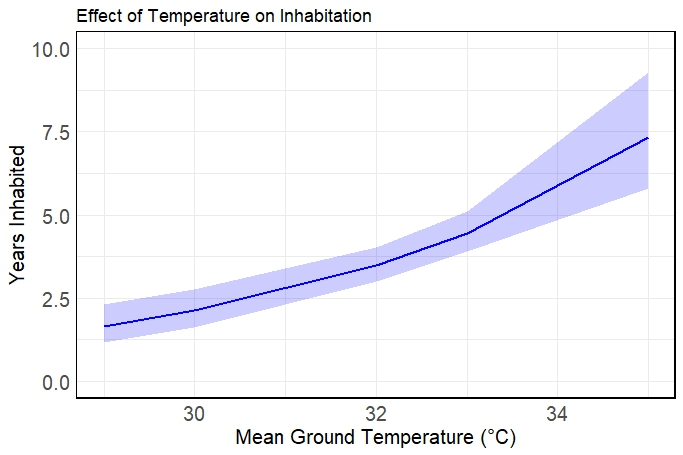
Mean ground temperature had the most significant effect on the inhabitation rate for larvae, with a 28% increase of inhabitation persistance for each 1 °C raise in temperature.
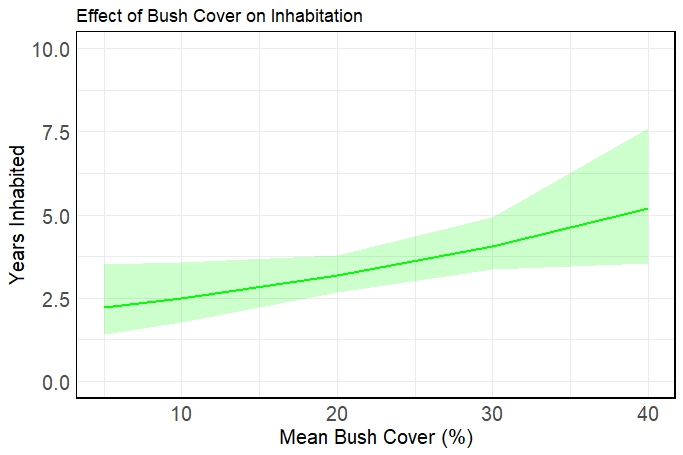
Mean bush cover in % had the second greatest inpact with a 2.4% increase in habitation with each unit of increase.
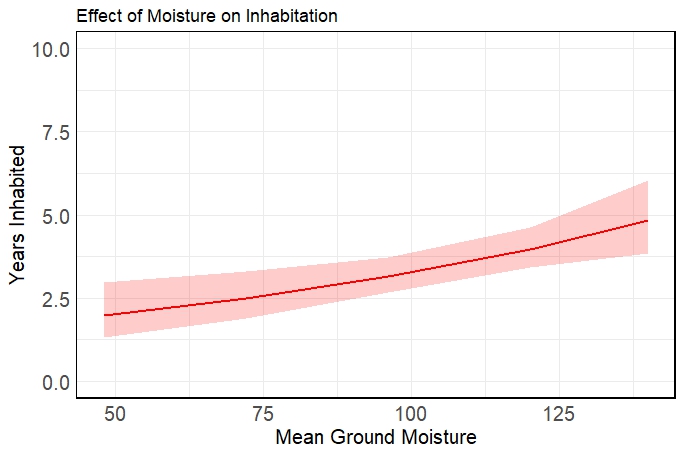
Mean ground moisture was the third most significant factor for the larvae with a 1% increase in habitation persistance with each unit of increase.
Results of habitat factors on the peak sum count of adults

Mean ground temperature also had the most significant effect on the inhabitation rate for adults, with a 54.8% increase of abundance for each 1 °C raise in temperature.
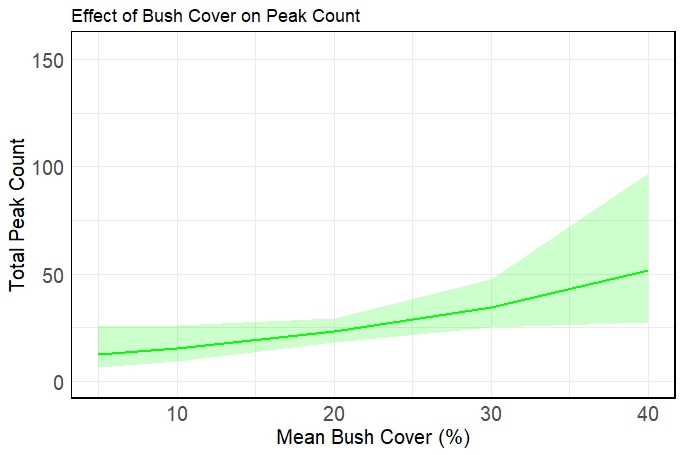
Mean bush cover in % had the second greatest inpact with a 4.1% increase in abundance with each unit of increase.
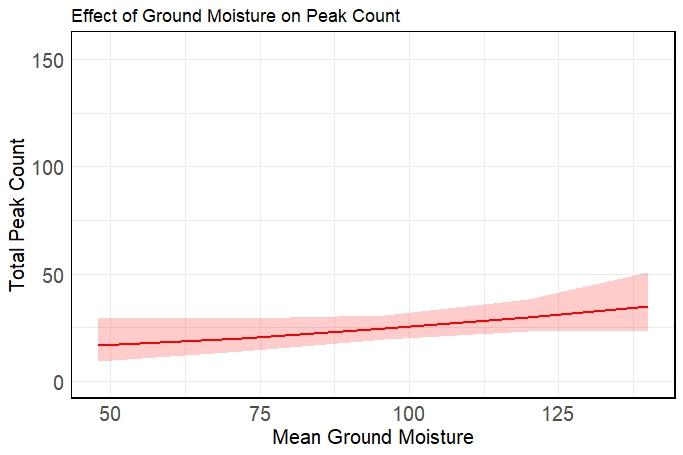
Mean ground moisture was the third most significant factor for the adults, although slightly less impactful for the adults in comparison to the larvae
Precipitation and ambient temperature
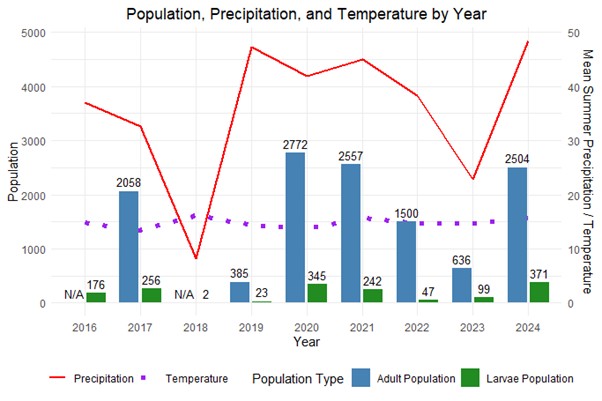
This plot shows the relationship between the numbers of nests and adult popultation estimates and climate factors such as mean precipitation and temperature during the summer months of each year.
Precipitation showed a significant influence on the larvae population size across years (p=0.00385) when analysed with a generalised regression model but did not seem to affect the adult population size. Neither mean summer temperature nor annual mean temperature showed significant relationships with population size for either life stage.